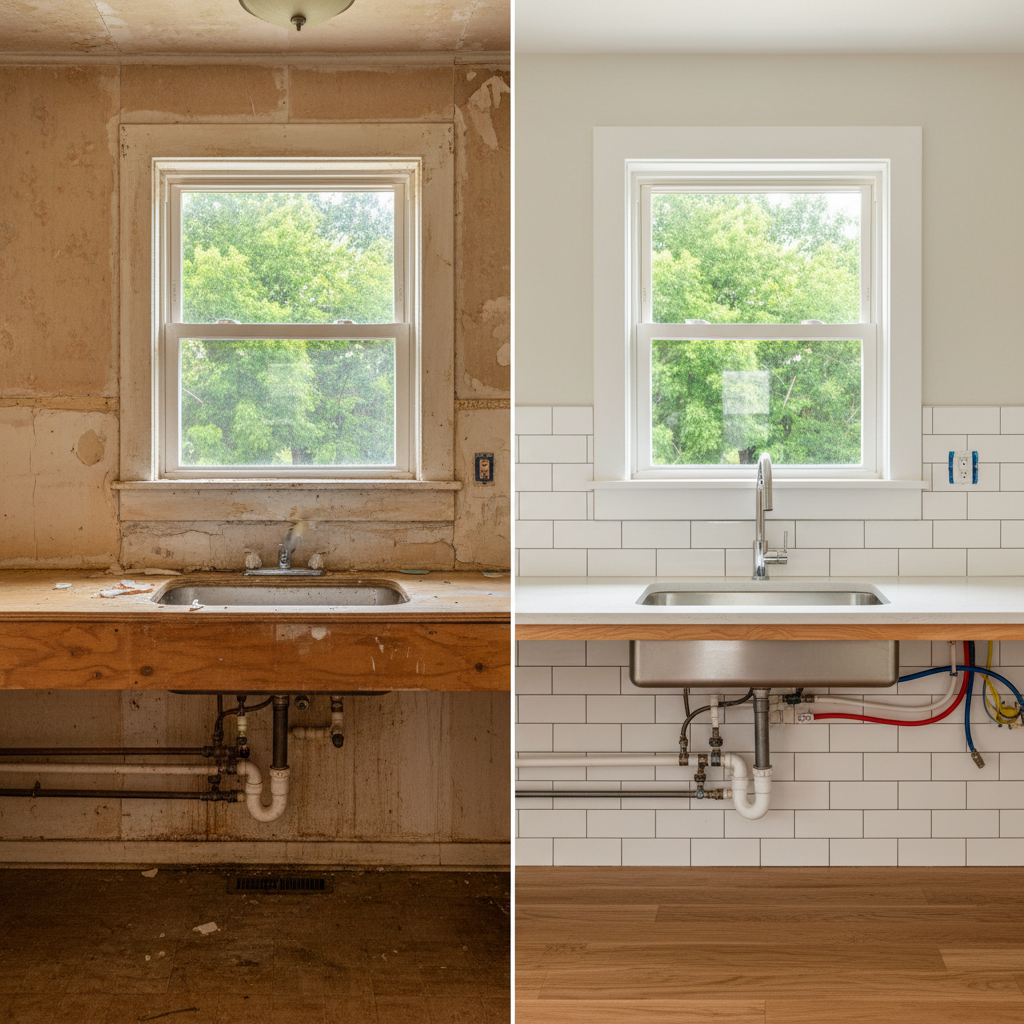
Let us talk about pipes. When you are building a new home or doing a big remodel here in Jenks, one of the most important decisions you will make is about your plumbing rough-in. This is true even if it is hidden behind walls. You have two main choices these days: PEX and copper. Both of these materials get the job done. They do it very differently. The right choice for your home depends on a few key things.
Our team at Prestige Kitchen Solutions has seen many plumbing systems over the years. We have a good idea of what works well and what does not, especially with our specific Oklahoma conditions. We will break down PEX and copper honestly. This includes looking at cost as well as durability as well as maintenance as well as how they look.
Cost: Where Your Dollars Go
Cost is usually the first thing on anyone's mind. PEX generally has the advantage here. The PEX material itself is cheaper. You are looking at PEX tubing costing about $0.50 to $2 per linear foot. Copper pipe typically runs $2 to $4 per linear foot for materials alone.
The savings do not stop there for your plumbing rough-in project. Installation is a big part of any plumbing job. PEX is a lot easier and faster to install. It is flexible, so plumbers can snake it through framing with fewer connections. Fewer connections mean less labor time. Less labor time means lower costs for you. Copper, on the other hand, is rigid. Every turn needs a fitting as well as every branch needs a fitting. Those connections usually involve soldering. That is skilled, time-consuming work. For a whole-house repipe, PEX can be 30-50% less in total installation costs compared to copper. Some estimates show that a PEX repipe for a typical 1,500-square-foot home might cost $4,000 to $6,000. Copper could be $8,000 to $10,000.
Durability and Longevity: Built to Last?
Copper has traditionally been seen as the gold standard when it comes to how long these pipes will last. It is a proven material. It has been used for decades. Copper can last 50 to 70 years. Sometimes it can last even 80 years with proper maintenance. That is a long time for a plumbing rough-in system.
PEX is newer to widespread use in the U.S. It is also very durable. Most PEX systems are rated for 40 to 50 years. Copper might have a slight edge on paper for sheer lifespan. PEX is still going to outlast most other components in your Jenks home.
Oklahoma conditions really matter here. Our freeze-thaw cycles can be tough. Copper is rigid. When water freezes inside it, the pipe can burst. This leads to costly repairs. PEX is flexible. It can expand a bit when water freezes. This often prevents those burst pipes. That is a huge advantage when we get those sudden cold snaps that drop temperatures into the teens. This is especially true for homes with pipes in unconditioned spaces like attics or crawl spaces in Jenks.
Another thing to consider is our water quality. Aggressive water can cause pinhole leaks in copper pipes in some areas. This can happen in as little as 20 years. PEX is immune to corrosion as well as mineral buildup. This means it will not develop those pinhole leaks. It is also resistant to chlorine degradation. This can be a factor in municipal water supplies.
Maintenance: What to Expect Down the Road
Both systems are pretty low maintenance when they are installed correctly. There are some differences to consider.
- Leaks: PEX has fewer fittings because it is flexible. This means fewer potential spots for leaks. If a leak does happen, PEX is often easier to repair. You can sometimes replace longer sections without as much demolition.
- Water Quality: Copper is naturally antimicrobial. Some homeowners prefer this. PEX is neutral. This means it will not corrode or leach metals into your water. Some PEX types might have a slight taste or odor when new. This usually goes away quickly. All certified PEX is approved for potable water.
- Noise: PEX is generally quieter. It absorbs sound better than rigid copper. This reduces the 'water hammer' effect as well as pipe noise.
Appearance: Does it Matter if it is Hidden?
Appearance is not a factor for most plumbing rough-in work. It is all behind walls and ceilings. Copper definitely has a more traditional, clean look if you have any exposed runs. This could be in a utility room or a basement. Some folks just prefer the look of metal pipes. PEX is plastic. It can look a bit more utilitarian. It is not meant for outdoor or UV-exposed applications without protection. Sunlight can make it brittle.
Our Recommendation for Jenks Homeowners
Our team at Prestige Kitchen Solutions generally recommends PEX for most homeowners in Jenks. This is especially true when considering everything. Our local climate and water conditions are important factors. Here is why we recommend PEX:
- Cost Savings: PEX is more affordable upfront. This is true for both materials as well as labor. That is a big deal for any budget.
- Freeze Resistance: This is very important for us in Oklahoma. PEX's flexibility means a much lower risk of burst pipes during our cold winters. This can save you a lot of headache as well as money.
- Corrosion Resistance: PEX holds up better to varying water chemistry. This reduces the chance of pinhole leaks. Pinhole leaks can be a problem with older copper systems.
- Ease of Installation: This means less disruption during construction or remodeling for your Jenks home.
There are times when copper still makes sense. Copper is a solid choice if you are building a high-end custom home. It is also good if you want the absolute longest lifespan possible. Specific high-temperature applications also make copper a good choice. Sometimes, a hybrid system can give you the best of both worlds. This uses copper for main lines as well as PEX for branches.
The right choice for your home is a conversation we should have. We can look at your specific project as well as your budget as well as your long-term goals. Our team at Prestige Kitchen Solutions is here to make sure your home's plumbing foundation is as solid as can be. This is true no matter which material you choose for your Jenks home.